Tuesday, 12 January 2016

Monday, 11 January 2016
Rest In Peace

I woke to the very sad
news this morning about David Bowie. He has been a part of my life since Space Oddity in 1969, but we lost touch for a few years.
Like a lot of my friends and many other teenagers in Britain, David Bowie came back into my world in July 1972 when he appeared on Top Of The Pops as Ziggy Stardust (with his Spiders From Mars). Starman really did seem from another world…It appears such a relatively simple song, but when Bowie looked into the camera about halfway through and pointed (“…so I picked on you”) his career really started to take off. Hit followed hit for the rest of the decade…Life On Mars; The Jean Genie; Rebel Rebel; Young Americans; Golden Years; Sound and Vision; Heroes; Boys Keep Swinging and finally in 1980 the incredible Ashes to Ashes.
Of course his albums were
stupendous…Diamond Dogs and Low being (just about!) my favourites, but from
Hunky Dory to Scary Monsters (and Super Creeps) his range of music and styles
were amazing. Other stand out songs for me include Panic in Detroit;
Sweet Thing, Candidate, Sweet Thing (Reprise); Right; Fascination; Can You Hear
Me; Station to Station; Be My Wife; Subterraneans; Blackout and The Secret Life
of Arabia.
1983’s Let’s Dance LP
featured some good stuff, but was nowhere near as high a standard as most of
his 70s work. Tonight the following year was the last album I bought of
his for some time. Apart from the catchy Blue Jean, the rest of the songs
were pretty dire. I did purchase the first Tin Machine LP and Prisoner of
Love was a great song and the rest were certainly an improvement on his recent
work. Around this time I mostly stopped buying records (never really did
like CDs) so his work since then is known to me only in certain songs I have
heard. However, the fanfare that greeted 2013's The Next Day album made
me listen to it on YouTube. Where Are We Now is a brilliant song and
there are some other gems on there as well. However, David Bowie’s 1970s
singles and LPs will always represent for me some of music’s finest moments.
Thank you so much David for
everything.
Monday, 4 January 2016
To Boldly Go...
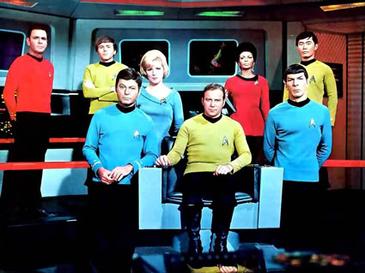
Star Trek first aired on BBC One in July 1969. I was twelve years old and loved it from its first moments. Where No Man Has Gone Before was the episode and it featured a man whose eyes glowed silver after the Enterprise encountered a strange "barrier" at the edge of the galaxy. He became some sort of superman who was a threat to the rest of the crew. Kirk eventually overcomes him and saves the day which would become a regular theme throughout the series.
Star Trek broke many television boundaries throughout its three series, including showing people of different cultures working and living together happily. Many episodes were types of morality plays where Kirk and his crew were tested over ethical matters. The relationship between the emotional Captain Kirk and the logical Vulcan Lieutenant Spock was at the heart of the programme's appeal.
My favourite episode of all was The City on the Edge of Forever which featured Joan Collins. Having gone mad due to an accidental overdose of medicine, Dr McCoy goes back in time to earth in the 1930s in the process altering history. Kirk and Spock go after him to New York in an attempt to retrieve him and time itself. After stealing some clothes to blend in, they meet a woman named Edith Keeler who runs the 21st Street Mission. They offer to work for her. Spock begins to attempt to find out how McCoy has altered history.
Kirk begins to fall in love with Edith, who is very interested in the future. McCoy stumbles into the mission where Edith takes him in, unbeknownst to Kirk. Spock finishes his work and reviewing the images of the original and altered timelines, discovers that Edith was supposed to have died in a traffic accident, which was somehow prevented by McCoy. Instead, Edith lived on to start a pacifist movement which influenced the United States sufficiently to delay its entrance into World War II, thus allowing Nazi Germany time to develop an atomic bomb and win the war. Kirk knows that Edith must die in order for time to return to normal.

Meanwhile, Edith nurses McCoy back to health, and he tells her his story. Though Edith is sceptical, she tells McCoy that he would like her eccentric new boyfriend. Later, as Kirk and Edith are walking to the movies, Edith mentions Dr. McCoy. Alarmed, Kirk tells Edith to stay there before running to find Spock. The three friends meet in front of the mission. As a curious Edith crosses the street to join them, she steps in front of a fast-moving truck. Instinctively, Kirk reacts, but freezes when Spock stops him. McCoy is restrained by Kirk as Edith is knocked down and killed.

McCoy tells Kirk that he could have saved her. “Do you know what you just did?" he says. Spock responds quietly, "He knows, Doctor. He knows." With Edith's death, history reverts to its original form.
Star Trek continued for three series before resurfacing at the end of the 1970s with the first of six motion picture films. The final movie (The Undiscovered Country) was the best of the series with a fine mixture of drama, adventure and comedy. Forget Star Wars and even Doctor Who, Star Trek is the best science fiction story of all.
Friday, 4 December 2015
We all came out to Montreux...On the Lake Geneva shoreline

On this day, forty-four years ago, The Montreux Casino in Switzerland burnt to the ground during a gig by Frank Zappa. The incident is immortalized by Deep Purple's 1973 hit, 'Smoke On The Water' - 'some stupid with a flare gun, burned the place to the ground..'.
Monday, 23 November 2015
Glamtastic!

Glam Rock...the music hall of the early 1970s was a fabulous era in British pop music. Marc Bolan, David Bowie, Sweet, Mud and Slade were the best of the bunch with single after single (Ride a White Swan, Starman, Ballroom Blitz, The Cat Crept In and Cum On Feel The Noize to name but five) hitting the top of the charts.

To be Glam you seemed to need glitter on your face and/or clothes and the ability to write or perform loud, brash 45s which acted as rallying calls to teenagers throughout the land. Most of the stars had been around for a while; Bowie and Bolan both had reasonably extensive back catalogues from the previous decade. However, re-inventing yourself became the norm for many around this time and from around late 1970 to mid 1975 Glam Rock ruled the singles charts.

Sparks arrived in Spring 1974 with the remarkable This Town Ain't Big Enough For Both Of Us which remains one of the greatest songs in pop music. It is tempting to feel that after this magical moment Glam fell into a decline, but there were still a few classics to come.
Overall, Glam Rock was great fun that refused to take music too seriously. Roll Away The Stone by the great Mott The Hoople is perhaps a fitting way to best remember those times:

The Family

The fly on the wall series of Spring and Summer 1974 was a programme I really enjoyed back in the year when I was finishing my time at school. The Wilkins family of Reading were the featured "stars" of the show who allowed TV cameras into their home and lives.
"Reality" television is now commonplace in the 21st Century, but back then the programme was different and very watchable. The only member of the family who seemed to be obviously acting was the matriarch Margaret Wilkins, but even so it was for me a fascinating glimpse into other people's lives.
Thursday, 15 October 2015
Those were the days...
The early 70s were a wonderful time. Music was incredibly great...Just last Saturday, I heard the chart from October 1972 and it included Elected by Alice Cooper, Burning Love by Elvis, John I'm Only Dancing by David Bowie AND the soon to be Number One...Mouldy Old Dough by Lieutenant Pigeon!!!
Almost as fab was the paper New Musical Express. The best writing around was there every week, courtesy of Tony Tyler, Brian Case, Charles Shaar Murray, Nick Kent and the late, great Ian MacDonald. From around 1972, when Nick Logan became Editor, the NME was the hippest music journal around. I remember first buying it that year when the flexi disc featuring highlights of the Rolling Stones Exile on Main Street was given away, but it was the Autumn of the following year when it became a weekly delight for me.
Along with these, Charles Shaar Murray's "gonzo" writings and Nick Kent's musings on Nick Drake and Brian Wilson added to the quality, as did Tony Benyon's anarchic cartoons of "The Lone Groover". Come 1976, and the paper got carried away with Punk and many of the writers moved on to be replaced by Tony Parsons and Julie Burchill. Both were highly opinionated, but their arrival coincided with beginning of the journal's long slow decline. Danny Baker arrived a little later and for a few years his reviews and features became the best things about the paper; his love of Disco and Soul being just what was needed.
However, by the end of the decade the magic had mostly gone. The advent of the Thatcher government brought about a more political stance at the expense of humour. Paul Morley produced many passionate reviews and articles (especially about Joy Division), but they were a little too earnest for yours truly. Maybe the music had changed, maybe I was just getting older...Whatever, in the words of the immortal Samuel K Amphong..."Where is Beatles Band?"
Almost as fab was the paper New Musical Express. The best writing around was there every week, courtesy of Tony Tyler, Brian Case, Charles Shaar Murray, Nick Kent and the late, great Ian MacDonald. From around 1972, when Nick Logan became Editor, the NME was the hippest music journal around. I remember first buying it that year when the flexi disc featuring highlights of the Rolling Stones Exile on Main Street was given away, but it was the Autumn of the following year when it became a weekly delight for me.
The singles and album reviews were just brilliant at times. Those that especially stood out were Ian MacDonald's...His insightful and intelligent thoughts and feelings were almost as enjoyable as the songs themselves. Pretzel Logic by Steely Dan, Kimono My House by Sparks and On the Beach by Neil Young showed shrewd and eclectic judgements on his behalf. Later reviews of Young Americans and Low by Bowie were even better.
Along with these, Charles Shaar Murray's "gonzo" writings and Nick Kent's musings on Nick Drake and Brian Wilson added to the quality, as did Tony Benyon's anarchic cartoons of "The Lone Groover". Come 1976, and the paper got carried away with Punk and many of the writers moved on to be replaced by Tony Parsons and Julie Burchill. Both were highly opinionated, but their arrival coincided with beginning of the journal's long slow decline. Danny Baker arrived a little later and for a few years his reviews and features became the best things about the paper; his love of Disco and Soul being just what was needed.
However, by the end of the decade the magic had mostly gone. The advent of the Thatcher government brought about a more political stance at the expense of humour. Paul Morley produced many passionate reviews and articles (especially about Joy Division), but they were a little too earnest for yours truly. Maybe the music had changed, maybe I was just getting older...Whatever, in the words of the immortal Samuel K Amphong..."Where is Beatles Band?"
Subscribe to:
Posts (Atom)